


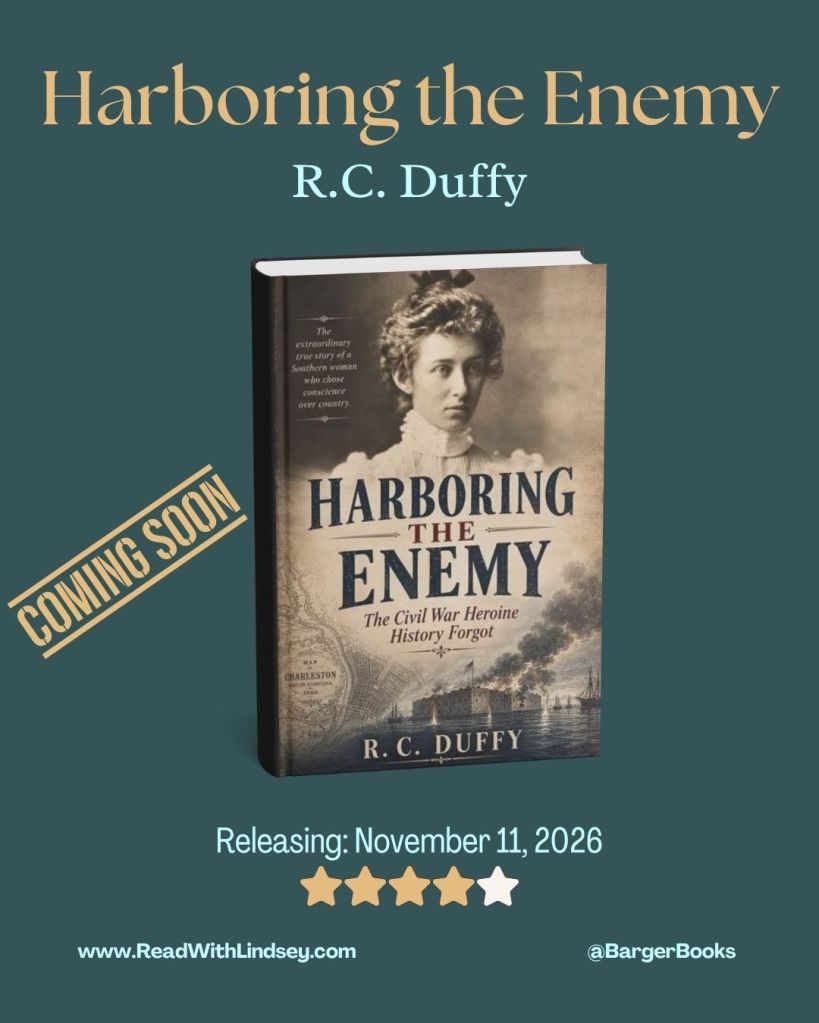
Thank you to NetGalley and American Legacy Media for providing this book for review consideration. All opinions are my own.
Charleston, 1861: Anna Itgen is a young German immigrant, newly married and expecting her first child when war upends her life. After her husband is killed, she must navigate single motherhood in a besieged city where a Confederate prison holds starving Union captives. What begins as a quiet act of compassion—bringing food to prisoners and guards—becomes something far more dangerous when Anna hides an escaped Union officer in her cellar. As Confederate forces grow suspicious, her willingness to help puts her at risk of being branded a traitor. The premise raises a compelling question: how much would you risk for a stranger when your own family’s survival is already uncertain?
In Harboring the Enemy: The Civil War Heroine History Forgot, R.C. Duffy tells the story of her grandmother, Anna Itgen, drawing on family history and nearly two years of research. At its heart is a woman whose courage deserves attention: a mother trying to protect her child while refusing to turn away from the suffering around her. The combination of personal history, wartime danger, and an overlooked woman’s perspective gives the book an appealing foundation. For me, however, the promise of that story was stronger than its execution.
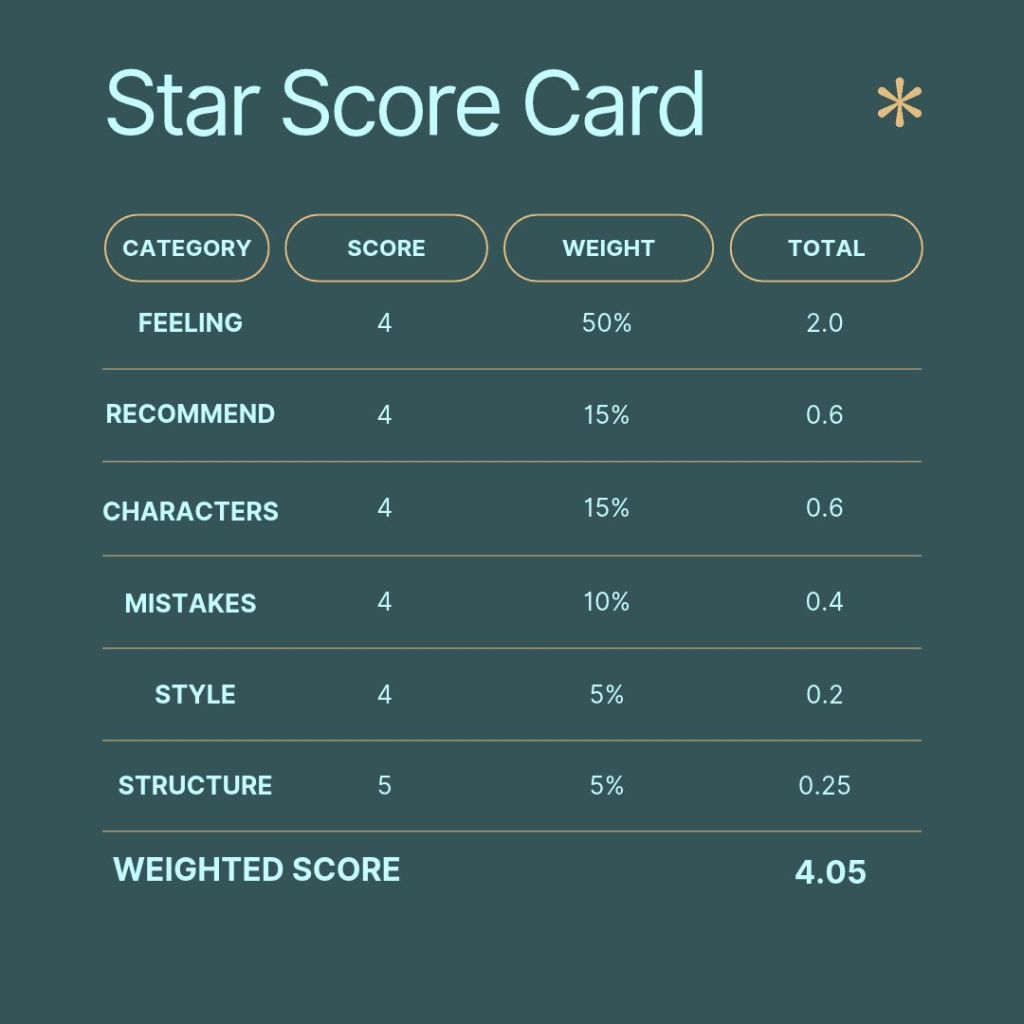
I give Harboring the Enemy 4 out of 5 stars. Although Anna’s story is compelling, the telling felt forced at times. I wanted more warmth, texture, and a stronger sense of everyday life to balance the biographical distance. At the same time, some scenes felt so heavily fictionalized that I struggled to see the historical foundation beneath them. Those two qualities created an uneven reading experience: the narrative could feel emotionally detached while also asking me to accept moments that did not feel fully convincing. For me, the pleasure of historical fiction lies in the balance between documented events and imagined conversations—the details that make it possible to picture yourself alongside the characters. Here, I wanted the history to provide a firmer anchor. More historical context and a clearer sense of how the imagined scenes connected to real events would have made the story more immersive and believable.
Because the story centers on a prisoner-of-war camp and the suffering of its captives, it may not suit every reader. Readers who prefer historical fiction with a strong, visible grounding in historical detail may find themselves wanting more context. Those drawn to overlooked women, acts of compassion during conflict, and family stories brought to life may find more to appreciate. If you enjoyed The Girl Who Came Home or Daughters of the Wreckage, this may be worth considering, though the balance between history and invention was my main reservation. Ultimately, Anna’s courage is what makes this story worth discovering, even when the storytelling does not quite match the strength of its subject.
Harboring the Enemy releases November 11. You can order a copy through our Bookshop.org page.
This post contains affiliate links.
What I’m Reading
- Current print book: Hawking, Graham Farmelo
- Current audio book: Buffalo Hunter Hunter, Stephen Graham Jones
- Book I’m most looking forward to: The Good Indian, Elaine Yellow Horse
Discover more from Read With Lindsey
Subscribe to get the latest posts sent to your email.
