

News and Updates
Happy Nonfiction November! I make a point of reading at least one nonfiction book every month, but this month we’re giving nonfiction the spotlight it deserves. Maybe you’re curious about a particular moment in history, want to understand someone else’s experience, or just love the satisfaction of learning something new.
November can be a noisy month. From elections this week to the rush toward Thanksgiving and the holiday season, escaping into a book might sound especially appealing. And while fiction can certainly take us somewhere else, nonfiction offers another kind of getaway: the chance to tune out the news cycle and immerse yourself in a real-world subject you genuinely want to explore.
So follow your curiosity this month. Pick up a biography, history, memoir, science book, essay collection, or whatever catches your eye. Wherever your reading takes you, I hope you enjoy the journey. And if you’re traveling to see family this holiday season, safe travels!
This Month
Nonfiction starts with the real world, but that doesn’t mean it has to read like a textbook. The best nonfiction has a point of view, a compelling voice, and often all the momentum of a great story. From memoir and biography to history, science, essays, reporting, nature writing, cookbooks, graphic nonfiction, and practical guides, there are countless ways to follow your curiosity.
A great nonfiction book might transport you to another era, turn a scientific mystery into a page-turner, or introduce you to a life and perspective far beyond your own. It can be serious and surprising, intimate and expansive, informative and entertaining. It can even send you into the kitchen, garden, workshop, or out into the world to try something for yourself.
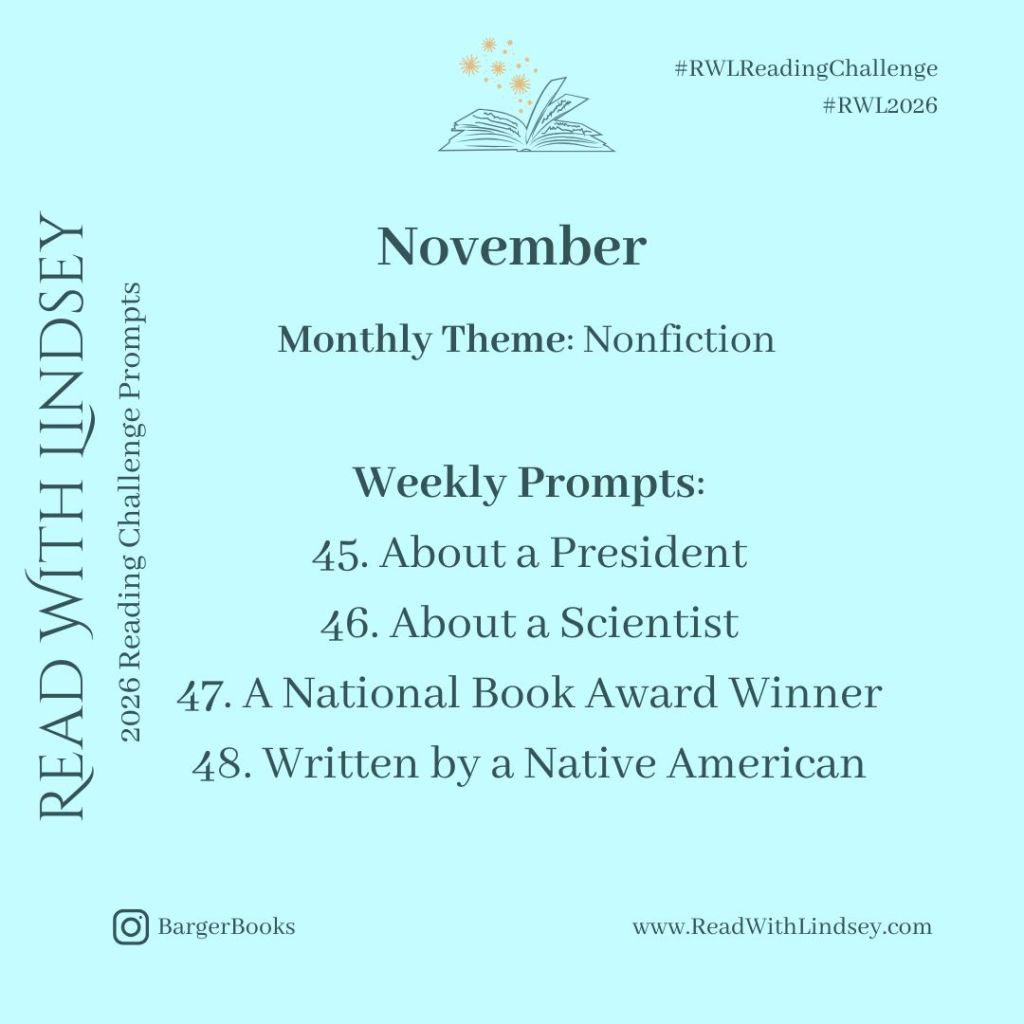
This month, our four prompts offer four different places to begin: a president for stories of leadership, power, and pivotal decisions; a scientist for curiosity and discovery; a National Book Award winner for a taste of celebrated nonfiction; and a book written by a Native American for stories shaped by Native knowledge, history, and lived experience.
Where will your curiosity take you this month?
Monthly Reading Challenge: Nonfiction
Below are the books we chose for this month’s reading challenge prompts. If you’re looking for other great books for this month, try one of the reads recommended by our StoryGraph community!
Weekly Reading Challenge: About a President
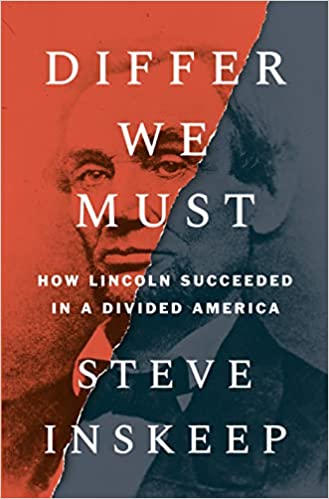
Steve Inskeep’s Differ We Must: How Lincoln Succeeded in a Divided America is a strong fit for About a President because it presents Abraham Lincoln as more than a monumental figure: it shows him making consequential choices as a politician and leader during a national crisis. Built around sixteen encounters with people who disagreed with him or wanted something from him, the book gives readers a vivid route into Lincoln’s presidency, his opposition to slavery, and the relationships and strategy that shaped his leadership.
It also delivers on the nonfiction prompt without feeling like a dry, cradle-to-grave biography. Inskeep uses lively, story-driven history to explore how Lincoln held to core beliefs while navigating a divided electorate and turning those beliefs into action. That makes it both an accessible challenge pick and a natural conversation starter: how do leaders work across profound disagreement without surrendering what matters?
Weekly Reading Challenge: About a Scientist
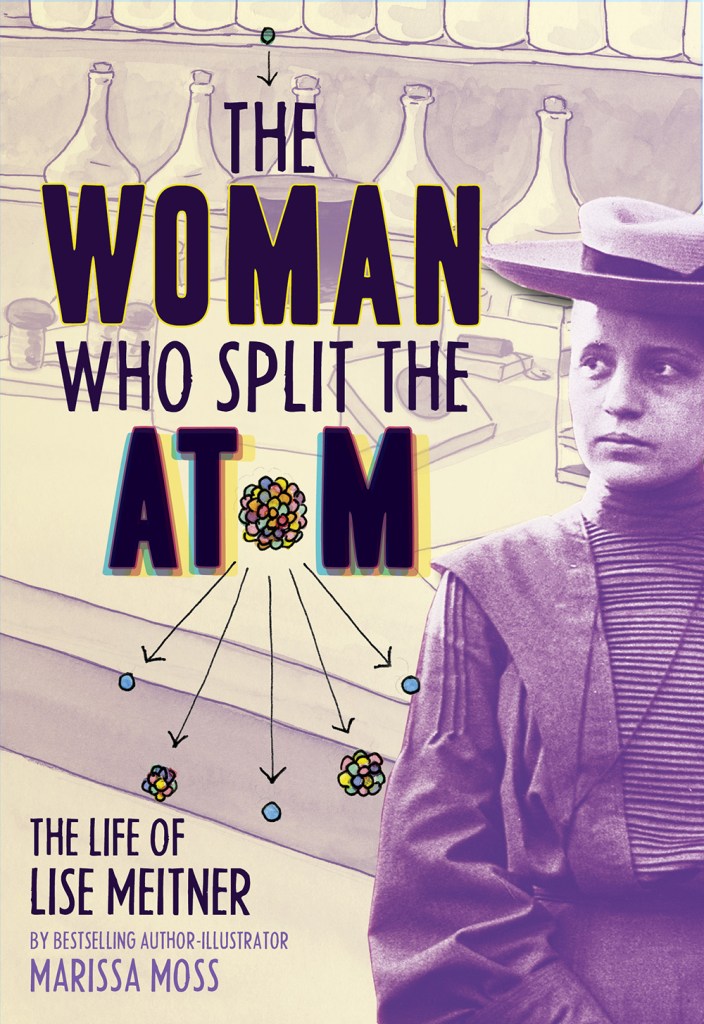
Marissa Moss’s The Woman Who Split the Atom: The Life of Lise Meitner is an especially direct fit for About a Scientist: it tells the story of physicist Lise Meitner, whose work helped explain nuclear fission, while showing the barriers she faced as a Jewish woman in early-20th-century science. Her story also opens up a compelling conversation about recognition and credit: her longtime collaborator Otto Hahn received the Nobel Prize for the discovery, while Meitner’s essential contribution went unrecognized by the committee.
It’s a strong nonfiction pick because Moss makes complex science approachable and wraps it in a dramatic, deeply human life story, from Meitner’s research in Berlin to her escape from Nazi Germany and her later opposition to the atomic bomb. Illustrated chapter openings, a glossary, timeline, and other back matter help readers follow the science and history without getting bogged down, making this a lively choice for readers who might not usually reach for a scientist’s biography.
Weekly Reading Challenge: National Book Award Winner
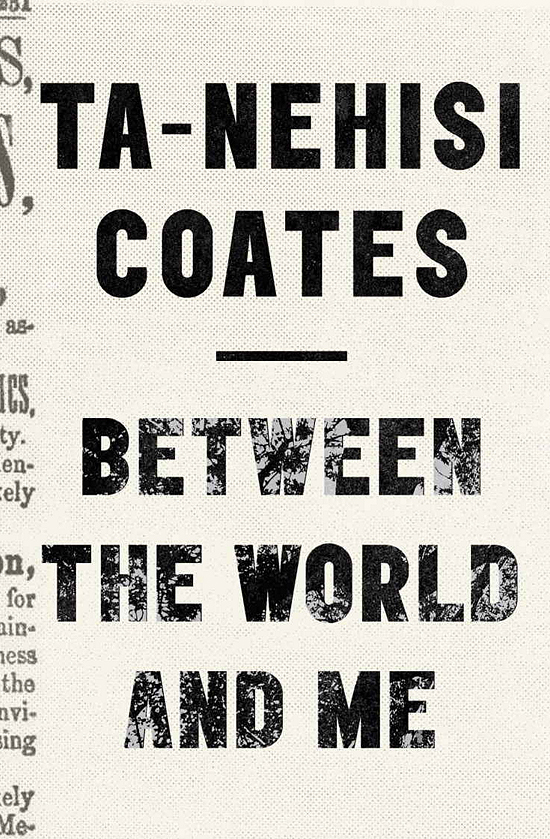
Ta-Nehisi Coates’s Between the World and Me is a perfect match for National Book Award Winner: it won the 2015 National Book Award for Nonfiction. Written as a letter to his adolescent son, Coates braids personal memoir, American history, and reporting to examine race, racial violence, and the lived experience of being Black in the United States. The National Book Foundation’s judges called it an essential text, and the book’s compact, intimate form makes that challenging subject feel immediate and personal.
It’s also a powerful nonfiction pick because it asks readers to reckon with the gap between America’s ideals and its history, without pretending the answers are simple. Coates moves from his own upbringing and education to the country’s broader history and present, giving readers plenty to reflect on and discuss: how family stories shape our understanding of history, what gets left out of the national narrative, and how we face difficult truths together. The publisher’s overview gives a fuller sense of the book’s personal and historical scope.
Weekly Reading Challenge: Written by a Native American
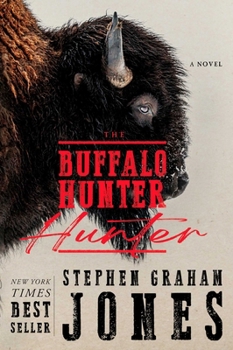
Stephen Graham Jones’s The Buffalo Hunter Hunter is a strong fit for Written by a Native American: Jones is a Blackfeet author and an enrolled member of the Blackfeet Tribe. The novel centers Blackfeet characters and history, following Good Stab through a story that blends historical fiction, horror, and the supernatural, with the 1870 Marias Massacre at its historical core. It’s a chance to spotlight a contemporary Indigenous author working boldly within genre fiction, rather than suggesting readers need to stick to one kind of book for the prompt.
The book also invites a thoughtful conversation about how fiction can engage with painful history: its framing diary and confessional voices turn a vampire story into a reckoning with violence, historical memory, and justice. Jones has described Indigenous-centered writing as a way of affirming that Native people are still here; that context makes the novel especially resonant for this prompt.
New This Month
We have several of our Most Anticipated releases hitting stores this month. Which are you picking up?
- November 17: Murmuration by TJ Klune
- November 24: Tom Clancy Coldest War by M.P. Woodward
In Case You Missed It
Last Month’s Recap
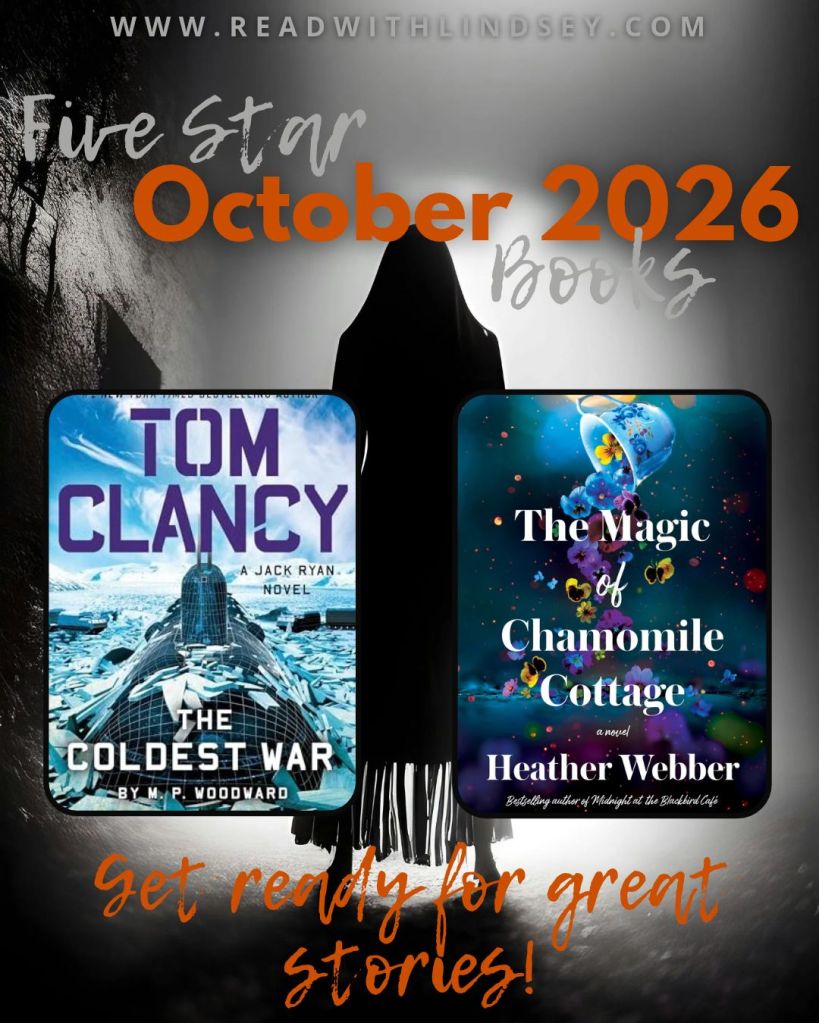
October gave us plenty of reasons to be spooked! We tackled scary workplaces, supernatural happenings, and the scariest thing of all: banned books. Thrillers may not always be my first choice, but this month brought some seriously good reading.
Across 10 books, we ended up with two 5-star reads, six 4-star reads, one 3-star read, and one DNF. And, honestly, those two 5-star books probably won’t surprise longtime readers. They may not have been perfect fits for our October theme, but I couldn’t resist these new releases.
Tom Clancy: The Coldest War took us into the Arctic for a military thriller worthy of the Jack Ryan series, while The Magic of Chamomile Cottage brought all the small-town warmth and found-family magic I hoped for. Choosing between them was tough, but Heather Webber won me over. Her characters, the heartfelt story, and the familiar touches connecting this book to her others made The Magic of Chamomile Cottage impossible to put out of my mind.
So, despite some stiff competition, Book of the Month goes to The Magic of Chamomile Cottage!
Now it’s your turn: What was your favorite October read?
Reading Playlist
This month’s nonfiction playlist puts real people and public events to music. Tracks like Jeezy and Nas’s “My President,” Nas’s “Black President,” P!nk’s “Dear Mr. President,” and Demi Lovato’s “Commander in Chief” capture different responses to presidential power, from the excitement of a historic election to pointed criticism of an administration. They’re not neutral histories, but that’s the point: each song is a snapshot of how artists experienced and interpreted its moment in history.
For a lighter turn toward science, Indigo Girls’ “Galileo” and Counting Crows’ “Einstein on the Beach” draw on the names and legacies of real scientists, while Thomas Dolby’s “She Blinded Me with Science” brings a playful, instantly recognizable pop edge. Coldplay’s “The Scientist” is the emotional wildcard: science works as a metaphor rather than a biography. Together, these songs make nonfiction feel bigger than books alone, blending fact, memory, opinion, and curiosity into a soundtrack.
Take a listen on Spotify and let me know if I missed any tunes you think should be included.
This post contains affiliate links.
What I’m Reading
- Current print book: Longstreet, Elizabeth Varnon
- Current audio book: Buffalo Hunter Hunter, Stephen Graham Jones
- Book I’m most looking forward to: The Last Match, Jessa Maxwell
Discover more from Read With Lindsey
Subscribe to get the latest posts sent to your email.
