


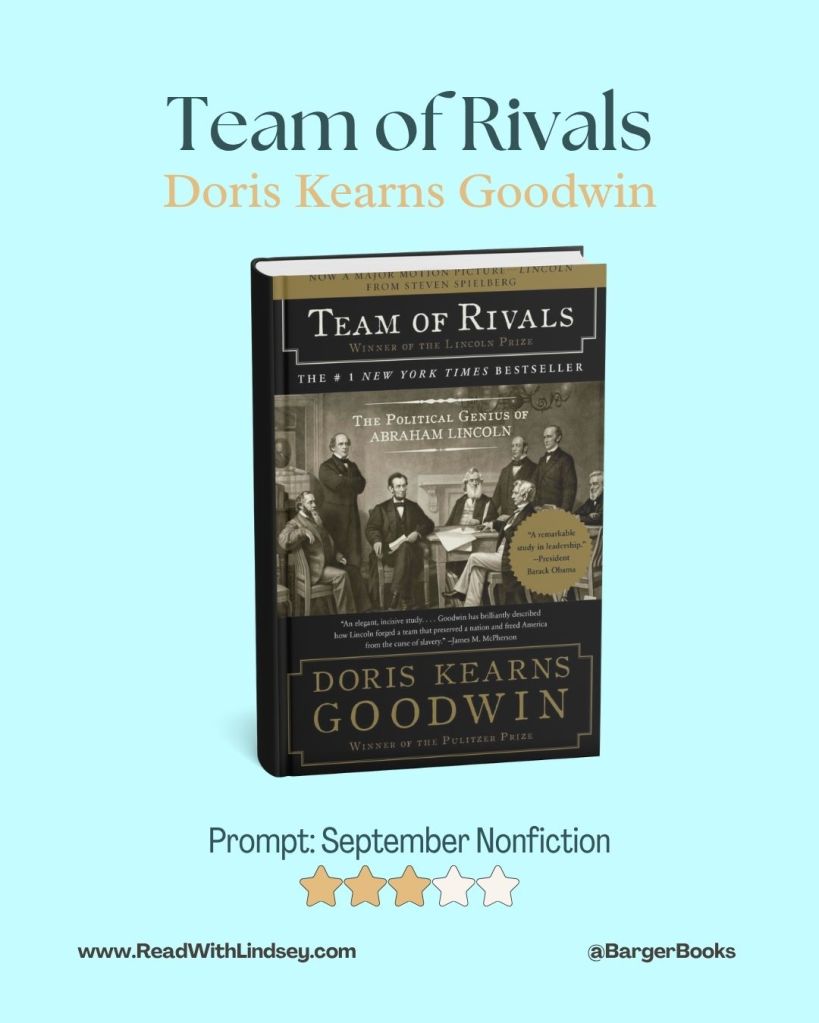
Team of Rivals by Doris Kearns Goodwin explores one of the most fascinating and often overlooked aspects of Abraham Lincoln’s presidency: his decision to surround himself with men who had once been his fiercest political opponents. Most Americans remember Lincoln through the lens of his assassination, the Civil War, and the Emancipation Proclamation, but Goodwin shifts the focus toward his cabinet and the leadership instincts that shaped his presidency. By appointing William H. Seward, Salmon P. Chase, Edward Bates, and other ambitious, strong-willed leaders to positions of power, Lincoln created a cabinet filled with experience, brilliance, ego, and tension. On paper, it should have been a recipe for dysfunction. In practice, Goodwin argues, Lincoln’s humility, patience, emotional intelligence, and political skill allowed him to turn rivalry into service during one of the most divided seasons in American history.
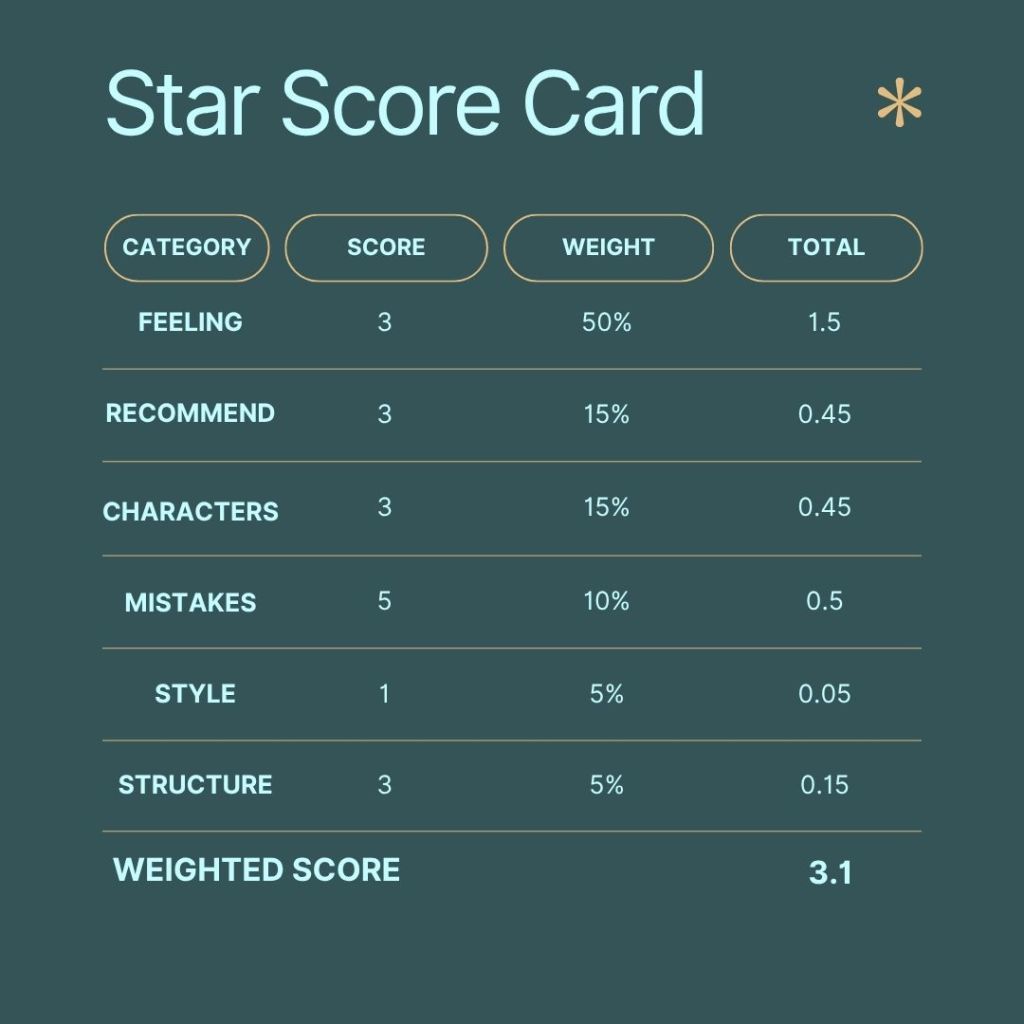
I give Team of Rivals 3 out of 5 stars. I went into this book hoping for a deeper look at the relationships among the men at the top of Lincoln’s cabinet—a team that was frequently at odds, politically ambitious, and, at times, actively working against one another. I expected tension, strategy, rivalry, and a clearer view of how Lincoln managed competing personalities during a national crisis. Instead, much of the book presents a more romanticized portrait of the cabinet, emphasizing the ways these men eventually rallied around Lincoln while spending less time on the sharp conflicts that made their collaboration so complicated in the first place. For a book built around the idea of “rivals,” I wanted more of the rivalry itself.
That said, Goodwin is at her strongest when she highlights Lincoln’s capacity to understand people. The book makes a compelling case that Lincoln was not simply a passive figure surrounded by more experienced politicians, but a leader who knew how to observe character, absorb criticism, wait for the right moment, and use the strengths of others without being threatened by them. I appreciated the argument that Lincoln’s genius was not only found in speeches or policy decisions, but in his ability to hold together a group of men who did not naturally trust one another. Still, I often felt the narrative smoothed out the cabinet’s rougher edges. Rather than giving readers a fully balanced portrait of political rivalry, personal ambition, and executive leadership, the book sometimes feels more interested in showing how nobly these figures aligned themselves behind the president.
It is also worth acknowledging that Team of Rivals and its author have been connected to plagiarism concerns over the years. While nothing in my reading experience stood out as obviously amiss, there were sections that felt more like a broad retelling of familiar history than a fresh interpretation of the material. That may be part of why the book did not fully meet my expectations. It is readable, polished, and clearly researched, but it did not always feel as revelatory as its reputation led me to believe. For readers who are newer to Lincoln, the Civil War cabinet, or nineteenth-century American politics, the book may feel rich and expansive. For readers already familiar with Lincoln and his contemporaries, it may feel less surprising.
If you are looking for a readable introduction to the inner workings of Lincoln’s cabinet—especially one that focuses on the strengths, accomplishments, and better qualities of each man—Team of Rivals is a worthwhile book to pick up. Goodwin writes in a way that makes a large cast of political figures accessible, and she captures the seriousness of the moment without making the book feel overly academic. However, if you are looking for a more critical, balanced, or conflict-driven study of Abraham Lincoln and the leaders around him, there are other books that may serve you better. This is less a gritty examination of political dysfunction and more a polished portrait of Lincoln’s leadership style.
I chose Team of Rivals for my September nonfiction read as part of my ongoing effort to read more about each of the American presidents. Over the past few months, I have spent a lot of time with Lincoln and his contemporaries, and this book gave me another angle from which to consider his leadership. Even though it was not exactly the book I hoped it would be, it still pushed me to think about the kind of leader Lincoln was: patient, perceptive, and willing to work with people who challenged him. October may be the month I move on to my least favorite president—Andrew Johnson—which should make for an entirely different reading experience. Do you have a favorite president, or one you find especially interesting to read about?
This post contains affiliate links.
What I’m Reading
- Current print book: Meet Me in the Afterglow, Dr. Elly McCausland
- Current audio book: Dubliners, James Joyce
- Book I’m most looking forward to: The Magic of Chamomile Cottage, Heather Webber
Discover more from Read With Lindsey
Subscribe to get the latest posts sent to your email.

One thought on “Team of Rivals”