


There’s a special kind of power in realistic fiction. It doesn’t rely on spectacle or distance. Instead, it works through emotional truth — the small tensions, private fears, layered relationships, and everyday moments that make a story feel less like entertainment and more like recognition.
That’s part of why realistic fiction with LGBTQ characters can hit so differently. When these stories are written with care, they offer more than representation at a glance. They offer something deeper: the feeling of being seen.
The best realistic fiction doesn’t just include people — it makes room for them to feel fully human on the page.
A story can technically include an LGBTQ character and still keep readers at a distance. Sometimes identity is treated like a shortcut, a symbol, or a lesson instead of something fully lived. But the books that stay with readers the longest usually do the opposite. They allow LGBTQ characters to be messy, funny, uncertain, guarded, tender, contradictory, and deeply specific. Their identity matters, but it doesn’t flatten the rest of who they are.
That fullness is what creates real emotional connection. Readers aren’t just noticing that a character exists. They’re recognizing something honest in the way that character moves through the world.
Realistic fiction is especially powerful here because it lives in the details of everyday life. It’s built from family tension, quiet self-discovery, friendship shifts, falling in love, trying to belong, and learning how to live inside your own skin. When LGBTQ characters are written into those recognizable emotional spaces, the result can feel intimate in a way that lingers.
What makes these stories unforgettable isn’t visibility alone — it’s emotional truth.
For LGBTQ readers, that truth can feel especially powerful. There is comfort in seeing a character who is not reduced to a stereotype or softened into something easier for others to understand. There is validation in watching a character navigate fear, longing, love, confusion, joy, or self-acceptance in ways that feel specific and real.
Even when a reader’s life doesn’t exactly match the story, that honesty can still create recognition. A reader may not share the same circumstances, but they can still feel the weight of wanting to belong, wanting to be understood, and wanting to live openly as themselves.
For other readers, these same books can deepen empathy in a natural, lasting way. The strongest stories don’t explain people through a lecture. They invite closeness. They let readers sit inside a character’s emotional reality long enough that the distance between “their story” and “a human story” begins to disappear.
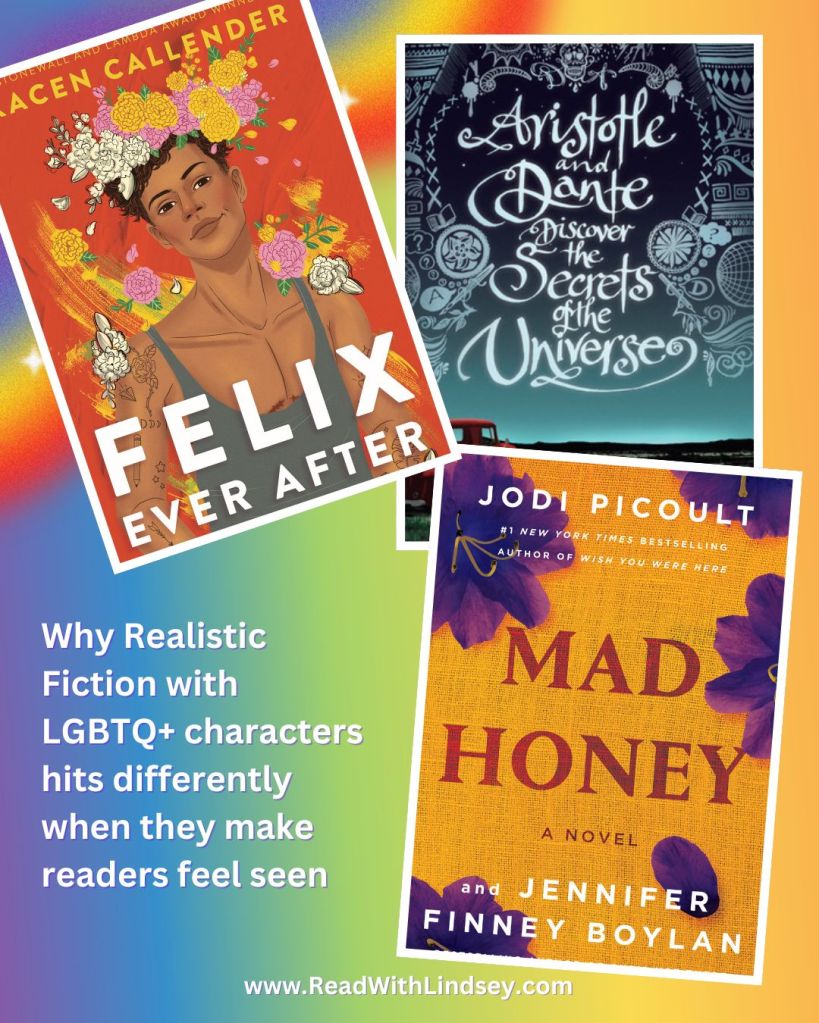
That’s one reason books like Mad Honey by Jodi Picoult and Jennifer Finney Boylan can resonate so strongly. The emotional impact doesn’t come only from what the novel is “about.” It comes from the way identity, vulnerability, fear, and love are woven into a larger human story. The book gives those themes room to exist inside a fully realized emotional life, which makes them feel more powerful and more personal.
The same can be said for Felix Ever After by Kacen Callender. Felix isn’t written as a symbol — he’s written as a person. He is funny, defensive, searching, hurt, hopeful, and deeply human. That complexity is what makes his story land. Likewise, Aristotle and Dante Discover the Secrets of the Universe by Benjamin Alire Sáenz stays with so many readers because it understands that identity and self-knowledge rarely arrive cleanly. Its power comes from vulnerability, silence, longing, and the slow process of becoming known.
Readers remember the books that let people be whole, not the books that turn them into messages.
If you ask readers to name their favorite authors, you rarely just get a list.
That may be the real difference between inclusion and recognition. Inclusion says a character is present. Recognition lets that character feel alive. It gives them interiority, relationships, contradictions, and room to exist beyond a single label.
And readers remember that. They may not remember every plot point years later, but they remember how a book made them feel. They remember the scene that felt painfully familiar. They remember the sentence that made them pause. They remember the relief of seeing complexity allowed to exist instead of being edited down.
The most meaningful realistic fiction trusts those moments. It doesn’t force importance. It lets emotion do the work.
That’s why realistic fiction with LGBTQ characters can hit differently when it’s done well. It reflects people not as ideas, but as whole lives. It reminds readers that identity isn’t separate from humanity — it’s part of the full emotional landscape of a person’s story.
And when a book captures that with honesty and care, it offers more than a compelling read. It offers recognition. It offers connection. And sometimes, it offers the quiet but lasting gift of making someone feel seen.
The books that stay with us are often the ones that make us feel recognized, not just represented.
This post contains affiliate links.
What I’m Reading
- Current print book: Abscond, Abraham Verghese
- Current audio book: Pop!, Angel Luis Colon
- Book I’m most looking forward to: The Incredible Winston Browne, Sean Dietrich
Discover more from Read With Lindsey
Subscribe to get the latest posts sent to your email.

One thought on “Why Realistic Fiction With LGBTQ Characters Hits Differently When They Make Readers Feel Seen”