

The history of traveling libraries is one of the most fascinating stories in library outreach. Long before digital collections and online library catalogs, librarians found creative ways to bring books to people in remote and underserved communities. In places where a traditional library building was too far away, traveling libraries helped close the gap.
From Montana’s boxcar library to Kentucky’s packhorse librarians and the later rise of bookmobiles, these mobile library services changed how readers accessed books, education, and community resources. Each version of the traveling library looked a little different, but they all shared the same mission: making books available to everyone.
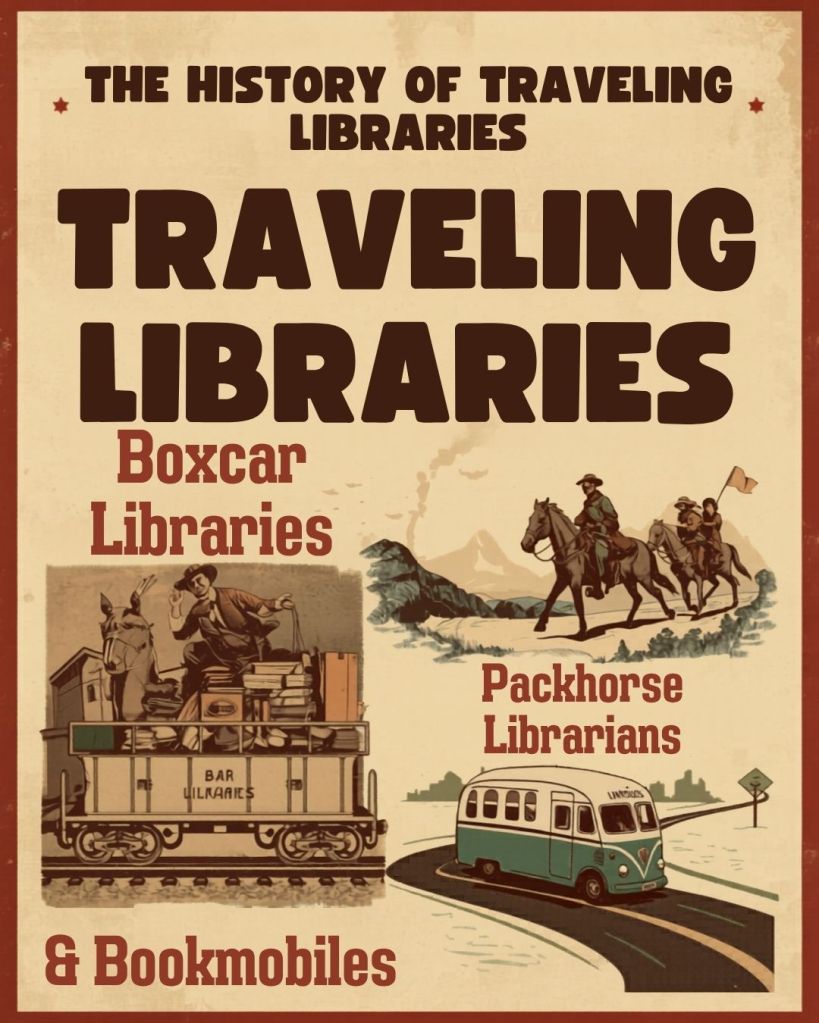
What Were Traveling Libraries?
Traveling libraries were mobile collections created to bring books and reading materials directly to people who could not easily visit a library. These services were especially important in rural areas, mountain communities, logging camps, and small towns.
Depending on the location and time period, traveling libraries used different forms of transportation. Some traveled by train. Others relied on horseback. Later, motor vehicles made it possible for bookmobiles to serve even more communities on a regular route.
The goal was simple but powerful: if readers could not get to the library, the library would go to them.
The Boxcar Library: A Train-Based Traveling Library
One of the most unique examples in the history of mobile libraries is the boxcar library. In Montana during the early twentieth century, a converted railroad boxcar was used to deliver books and magazines to remote logging camps.
This early traveling library served workers who often lived far from towns and had limited access to reading materials. Instead of expecting those readers to travel to a permanent library, the books arrived by rail. The boxcar library became a practical and imaginative solution to a real access problem.
The appeal of the boxcar library was not just its novelty. It showed how deeply librarians believed in outreach and literacy. A railroad car filled with books may sound unusual today, but it was a meaningful way to connect isolated communities with stories, information, and education.
For many readers, the boxcar library represented more than convenience. It offered a connection to the wider world.
Books About the Boxcar Library and Mobile Library History
- The Boxcar Librarian by Brianna Labuskes – (our reading challenge prompt this week) A historical novel inspired by Montana’s boxcar library.
- Library on Wheels: Mary Lemist Titcomb and America’s First Bookmobile by Sharlee Glenn (nonfiction) A useful choice for readers interested in the broader history of mobile library service.
- Bookmobiles in America: An Illustrated History by Orty Ortwein (illustrated nonfiction) A strong overview of how mobile libraries evolved in the United States.
The Packhorse Librarians of Kentucky
When people think about the history of traveling libraries, the packhorse librarians are often one of the first examples that come to mind. During the Great Depression, the Pack Horse Library Project in Kentucky brought books to rural Appalachian communities through the Works Progress Administration.
These librarians traveled on horseback or by mule, carrying books through difficult mountain terrain to reach families with little or no access to library services. Their work was physically demanding and often dangerous, but it played an important role in expanding literacy and access to reading.
The packhorse librarians delivered more than books. In many cases, they also brought magazines, newspapers, and handmade scrapbooks filled with recipes, health advice, and household information. Their work made library service deeply personal and community-centered.
What makes the packhorse librarians so memorable is the combination of courage and care in their service. They are a lasting symbol of what libraries can do when access is treated as a priority rather than an afterthought.
Books About Packhorse Librarians
- Down Cut Shin Creek: The Pack Horse Librarians of Kentucky by Kathi Appelt and Jeanne Cannella Schmitzer (nonfiction children’s literature) A nonfiction title that offers historical background on the program.
- The Book Woman of Troublesome Creek by Kim Michele Richardson (Reader favorite) A bestselling historical novel inspired by the Pack Horse Library Project.
- The Giver of Stars by Jojo Moyes (historical romance) A popular novel centered on women delivering books in rural Kentucky.
The History of Bookmobiles
The next major step in the evolution of traveling libraries was the bookmobile. As roads improved and motor vehicles became more common, libraries began using vans, trucks, and buses to bring books directly to neighborhoods, schools, and rural communities.
The history of bookmobiles reflects a shift toward more flexible and consistent outreach. Unlike earlier forms of mobile library service that depended on rail lines or animal travel, bookmobiles could follow scheduled routes and serve a wider range of readers.
For many families, the bookmobile was their first library experience. Children could step inside, browse the shelves, and choose books close to home. Adults could access reading material without needing to make a long trip into town. The bookmobile made the library feel visible, friendly, and accessible.
Bookmobiles also helped redefine what a library could be. They showed that a library was not just a building. It was a service, a relationship, and a commitment to meeting people where they were.
Books About Bookmobiles
- Bookmobiles in America: An Illustrated History by Orty Ortwein (illustrated nonfiction) One of the best starting points for readers curious about bookmobile history.
- Library on Wheels: Mary Lemist Titcomb and America’s First Bookmobile by Sharlee Glenn (nonfiction) A great introduction to one of the earliest pioneers of mobile library service.
- Miss Dorothy and Her Bookmobile by Gloria Houston (children’s literature) A charming book that highlights the impact of bookmobiles in rural communities.
Why the History of Traveling Libraries Still Matters
The history of traveling libraries matters because it highlights one of the most important values in librarianship: access. Boxcar libraries, packhorse librarians, and bookmobiles all existed because communities needed books, and librarians were willing to find creative ways to deliver them.
These mobile library efforts helped people learn, imagine, and stay connected. They brought reading materials to workers in remote camps, families in the mountains, and children in rural towns. In every case, the message was the same: books should not be limited only to people who live close to a library building.
That idea still matters today. Modern outreach vans, pop-up libraries, and mobile literacy programs continue the same mission in new forms. The tools may have changed, but the purpose remains the same.
Traveling libraries remind us that access to books has always required intention, creativity, and care.
Final Thoughts
From the boxcar library to the packhorse librarians of Kentucky and the enduring impact of bookmobiles, the story of traveling libraries is a powerful part of library history. These services transformed access to books for countless readers and showed that libraries are at their best when they reach beyond their walls.s prompts.
Which kind of traveling library fascinates you most — the boxcar library, the packhorse librarians, or the bookmobile? Let me know in the comments, and if you have a favorite book about libraries or librarians, I’d love to hear that too.
This post contains affiliate links.
What I’m Reading
- Current print book: Salt Air Promises, Francine Chiaramonte
- Current audio book: The Lions of Fifth Avenue, Fiona Davis
- Book I’m most looking forward to: Pretty Dead Things, Kelsey Cox
Discover more from Read With Lindsey
Subscribe to get the latest posts sent to your email.
