
February found me at my first real book festival in Amelia Island, Florida. I made a solo weekend out of my journey, staying about an hour north of Amelia Island in Brunswick, Georgia, and exploring some of the other islands nearby when not doing all things books at the festival!
I was immediately drawn to the idea of attending this festival for a handful of reasons: it was within driving distance of my home, it was free to attend, and one of my favorite authors was speaking. If you’re familiar with the “Peaches to Beaches” yard sale held every March in Georgia, you already know the route it took to get me from my home to Brunswick down Hwy 341. From there, it was a quick drive down I-95 to Amelia Island. I chose not to stay on the island because of the cost – hotels/resorts on Amelia Island were more than double what my room was in Brunswick.
The Amelia Island Book Festival is dedicated to our kids and their reading. The festival itself is held in a local school, utilizing the gym for the book sale and the auditorium for the author talks. Outside of the festival events, there are multiple fundraisers throughout the year to financially support the organization’s goals of promoting literacy in the area. They also do “authors in schools” events where writers bring their stories alive for the kids of Northern Florida. For this specific event, the organizers also gave out free books to kids in attendance from some great local and national authors!
The Book Fair
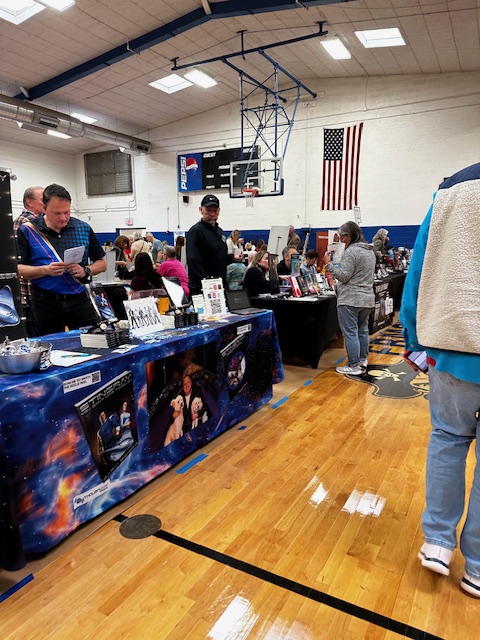
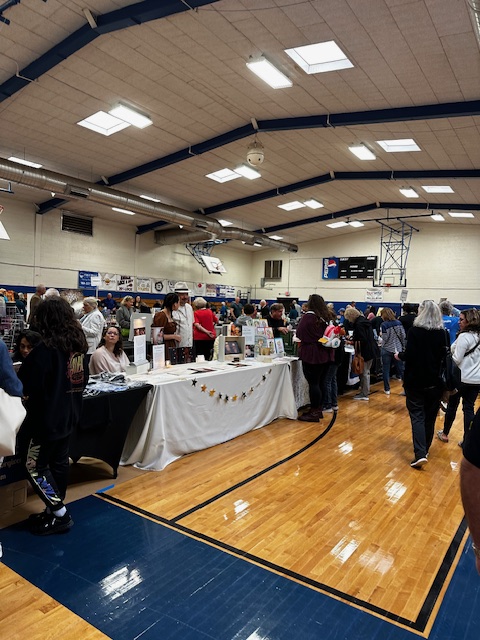
I didn’t realize how excited I would be for the book fair portion of the day! The organizers set up the gym to resemble a large convention hall crossed with a Scholastic book fair. There were so many tables set up for all the authors to display their books! I enjoyed walking through the room listening to and watching the authors interact with readers. I stopped to talk with several authors at random to discuss their books and buy copies. The authors were so generous with their time telling me all about their characters and the stories behind their books, as well as signing their books for me!
I picked up so many books here I had to make a few separate trips back to the truck to drop off my hoard! Next time, I’ll definitely bring a bookbag or rolling cart to help hold everything. When you entered the gym, organizers provided you with a list of authors and what tables they were at based on genre – I wish I had done more research on the authors and their works before arrival so I could have better determined which ones I wanted to visit with. This was one of those situations where, if I had unlimited resources (and bigger arms), I would have bought a copy of every book being touted on these tables!

The Author Talks
As I mentioned, one of the main reasons I chose to attend this festival was to hear the author talks. In particular, I wanted to see Terah Shelton Harris (2nd from the right in the above photo). I have loved both of her releases – I reviewed Long After We Are Gone here a while back and it will release May 14th (preorders open now). The talk shown in this photo was as group chat moderated by the PEN Florida director Katie Blankenship. Along with Harris, the panel included Deborah Goodrich Royce and Kevin Powers.
Royce is most recognized for her time gracing our small screens in shows like “All My Children”, “St. Elsewhere”, and “Beverly Hills, 90210”. She stepped away from acting in the 1990s and has been actively writing since. As part of this panel, she presented information on her third novel Reef Road, which is based in part on a true crime connected to her mother.
You may recognize Kevin Powers’ name as the author of The Yellow Birds – his debut novel which utilized his experiences as a soldier in the Middle East for inspiration. Powers is local to Amelia Island, which gave an interesting dynamic to this conversation, bringing in a national view with Royce, regional with Harris, and local with Powers. Just before taking the stage for this talk, Powers was notified The Yellow Birds was recently banned in a Texas school district, making him the latest author to face censorship, and giving a certain tone to the conversation in this talk, set in the top book banning state in the US.
As a librarian, Harris provided insight into the purpose of these institutions as sources of knowledge stating that librarians aren’t here to police what you read, but to provide access. An interesting common thread between all of the panelists was that they don’t take well to being told what to read, or what to shelve – it should be an individual’s decision what they or their minor children read, not the community. Books can transport us to places we wouldn’t be exposed to otherwise, and they can also help us understand situations or individuals we may not see otherwise.
Throughout this conversation, my mind was on Mad Honey by Jodi Picoult and Jennifer Fenney Boylan. While I thought I understood what it meant to be transgender and what that decision looked like for parents and teens, I had no idea the weight of those decisions and the prejudice faced by the individuals making them until reading this book. Absorbing the story in these pages allowed me to be more compassionate and react more appropriately when approached by one of my coworkers several months later who revealed to me their decision to transition. Without the knowledge in the story of Mad Honey, and other books like it, I would not have been prepared for that conversation.
The moderator also brought up that one of the challenges often presented during school book bans is that these children can still access these books in other ways – public libraries (if they haven’t already been banned there, too), online or in person shopping outlets. However, most of the youth affected by these book bans either don’t have a way to access these other outlets or can’t afford them. For instance, in my community, to walk from my home to the closest library would take me several hours and down some very dangerous high-traffic avenues – not reasonable for our youth. They are also often affecting low-income neighborhoods where families don’t have the money in their budget to purchase these books.
This topic took a slightly angry turn towards the end of the Q&A with the moderator delivering exhortations about the unreasonableness of book bans and the amount of money spent by both sides to deal with the lawsuits and meetings generated by the conversations. While I understand her frustrations, I felt like she may have taken it one step too far, especially since it was in reaction to a question from an audience member who showed up late and didn’t hear the full conversation between the panelists.

Take Aways
In the future, I am going to do more research on the authors who will be attending the book festivals. There were multiple other speakers later in the day, but I chose not to stay for those discussions – they were mostly children’s authors and I didn’t necessarily want to sit through more discussions of book bans after the way this author talk ended. I also feel like I may have missed out talking with authors I would be interested in at the book fair.
My only other takeaway was the storage capacity needed for all the books! I will definitely be using a cart or bookbag in the future. I will also have to take that into consideration when planning which festivals to attend – if parking is too far away, or if I fly to the festival, I may have to rethink my book buying!
What book festivals are you heading to this year? I’d love to meet up with you onsite!
This post contains affiliate links.
What I’m Reading
- Current print book: Gung Ho!, Ken Blanchard & Sheldon Bowles
- Current audio book: Fangirl Down, Tessa Bailey
- Book I’m most looking forward to: Anxious People, Fredrik Backman
Discover more from Read With Lindsey
Subscribe to get the latest posts sent to your email.
