

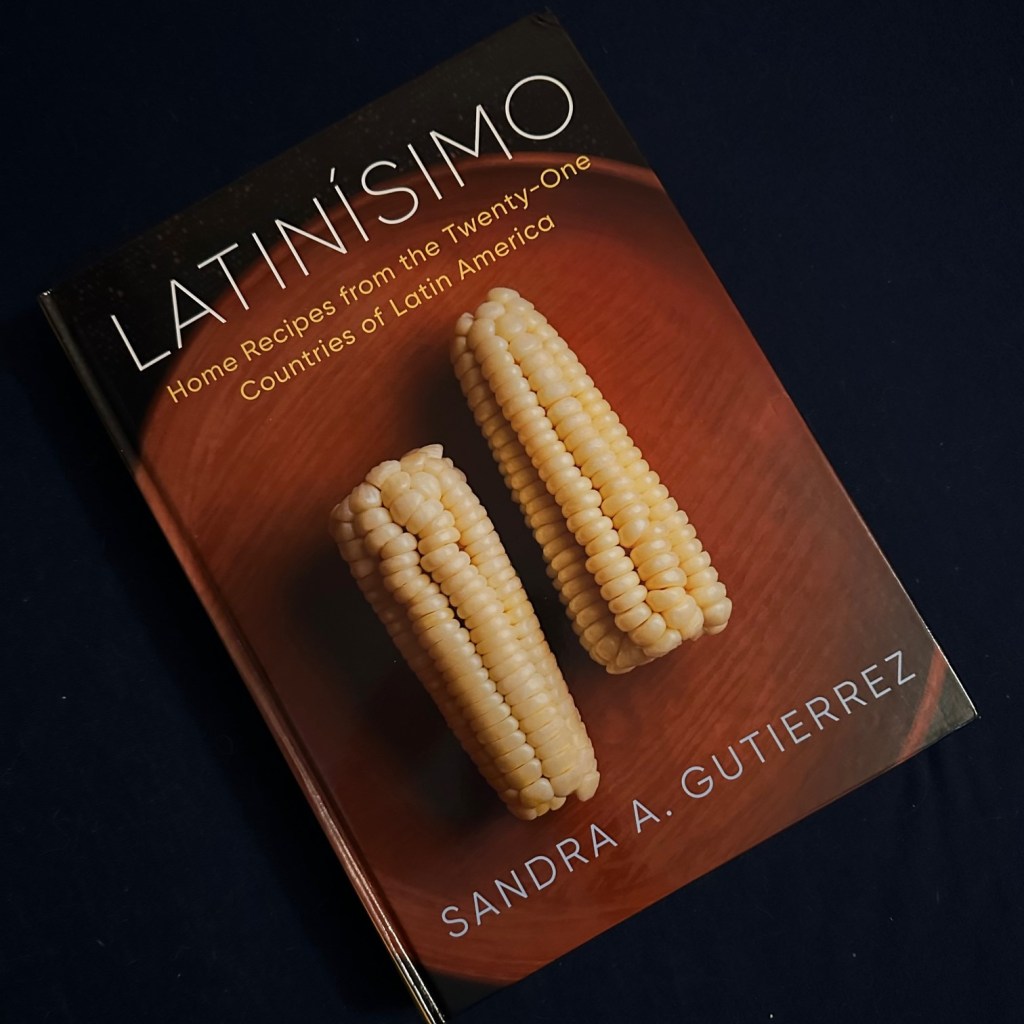
I was back at the Atlanta History Center on Tuesday evening to hear chef and food historian Sandra A. Gutierrez discuss her latest book Latinísimo. Gutierrez is well known in the food world and the book even makes mention that her first tortilla press is currently sitting in the National Museum of American History. She had several award-winning chef-friends in attendance, and it was fun hearing them interact!
This big, beautiful cookbook includes over 300 recipes (and 400 variations) of foods common to the 21 Latin American countries. The hard cover gives it the look and feel of a science textbook…until you open it and reveal the wealth of knowledge and delicious recipes! With sections detailing the History of Latin American Cuisine, Notes on Ingredients, and even resources to order your own tools and equipment! The author read from the Introduction to start the discussion which covered so much information.
If you would like to avoid spoilers or too much detail, please skip ahead by clicking here.
A common theme throughout the discussion and the introduction was leaning into familiarity. Gutierrez discusses Mexico as the “front door” – the first step into the world of Latin America. It is the one Latin American cuisine most familiar to Americans as a whole. As the author mentioned in the discussion, you’d be hard pressed to find an American who hasn’t eaten a taco, burrito, or enchilada at this point my very picky kids not included. But moving past Mexico, I find it hard to think of many dishes common to the 20 other countries.
Gutierrez discussed stereotypes of both Latin American food and people as she has encountered them since moving to North Carolina in 1985. As the first Latinos in their country club neighborhood, her family faced complaints to the neighborhood association and neighbors saying they must be drug cartel members, someone’s maid or gardener, or even agricultural workers. The author mentioned it’s important to see past the stereotypes – prejudice is the just the fear of the unknown and there’s so much more we have in common than differences that set us apart.
This same concept can be applied to food. An easy way to dig in to this concept is with sofrito. The basic sofrito is just onions and oil – this came from the European invaders. However, as you travel through the region, you’ll find different variations with additional that change the flavor and even the texture slightly – this is where the variations these recipes come from.
These recipes also show the influence of the three pillars of cuisine in this region – the indigenous, the European, and the African. Unlike in the American south, segregation and assimilation were not pushed in Latin America. Instead, the differences and uniqueness were celebrated. Gutierrez even discussed how marriages between the African people brought over as slaves and the other ethnic groups were actually encouraged. It is also interesting to think about the different ingredients and dishes brought over from Europe and Africa that we often think started here, and vice versa. For instance, potatoes and polenta both started in the Americas, but are often thought of as Irish and Italian foods respectively.
Other cultures also appeared in Latin America over the century. The region has a vast array of topography and climates that made it easy for settlers to feel at home in their surroundings. For instance, Italians love Argentina where Chinese and Japanese prefer the regions with shoreline and mountains close together. The melding of these cuisines has given additional unique twists to the flavors and techniques found in each country.
Guiterrez was very specific in stating that these should not be considered “authentic recipes”. She stated, “how can you call your grandmother’s recipe authentic, but not your friend’s grandmother’s when it is slightly different?” These are not her recipes either – they come from over 30 years of research into the cuisine. Gutierrez utilized handwritten notebooks and other materials from as far back as the 1500’s she found in libraries, as well as cookbooks from other European cultures that influenced the region. She mentioned the list of possible recipes started with over 9,000 dishes. She began paring them down and managed to hit just 2,000 when they started shopping this book to publishers. That is still a long way from the 357 in the final volume!
When Gutierrez began testing the final recipes for this book, she used a unique method since the pandemic had just shut down the world. She reached out to chefs and friends in the food industry to set up virtual sessions with their teams. The chefs would cook the recipe as you will find it in the cookbook with their staff following along. Afterwards, Gutierrez interviewed the staff about their own history with the dish – this is where many of the variations came from that are listed in the notes. These variations could be different ingredients or even techniques.
One final comment on the recipes she chose revolved around why home cooks like me will enjoy this book. These recipes are not special event or restaurant recipes – they are simpler recipes that home cooks throughout the region turn to when they need to put dinner on the table after a long day. These are also comfort foods similar to the comfort foods you may find on your own family’s table. Gutierrez encourages readers to start with recipes that are familiar or similar to things you know, then start branching out to try new things.
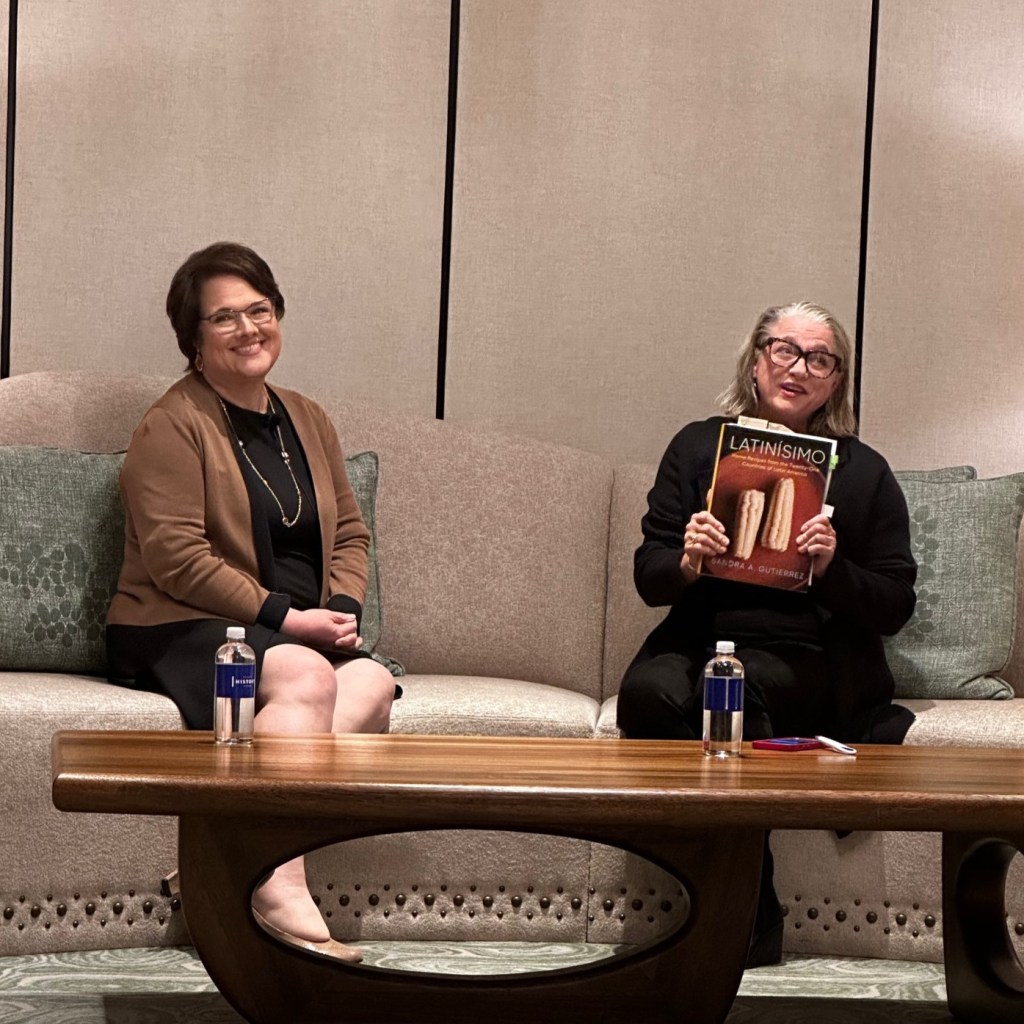
Gutierrez mentioned that she tried to include recipes from each of the 21 Latin American countries in each section of the cookbook. These sections are grouped around ingredients, not political or timeline divisions. When asked during the Q&A which country she struggled with the most in terms of finding recipes, Gutierrez said it was Paraguay. As one of only two landlocked countries in the region, there weren’t as many influences from outside cultures and the indigenous cuisines and cultures still ruled. Guiterrez was also asked about the stereotype that all Latin American food is unhealthy. However, the author pointed out the largest chapter in the book is actually on vegetables with many healthy and light dishes we may not have considered as Latin American before!
As a final parting remark before closing the evening, Gutierrez talked about how this is a cookbook for more than just the home cook looking to expand their horizons. The book was written for people who don’t cook but love to read. There is so much material included in the book beyond just the recipes – you’ll find yourself digging into Gutierrez’s wealth of knowledge and her prime skill as a food historian.
I found it interesting that there was a much smaller group at the event than with other recent book signings. I also noticed that most of my “regular crowd” at these events was nowhere to be found. If you have the opportunity to attend an author event or book signing for a cookbook, I highly encourage you to do it! This is my third signed cookbook and the conversation at these events is a different kind of fun than what you’d see at a fiction book event! As for what I’m making first…I’m trying my hand at the Arepas Clásicas on page 104! We tried making arepas last year as part of my eldest child’s project for Spanish class but failed miserably. The technique looks so different than what we tried, and I can’t wait to give it a go!
If you already have your copy of Latinísimo, drop your favorite recipe and your thoughts in the comments below!
This post contains affiliate links.
What I’m Reading
- Current print book: Island of the Blue Dolphins, Scott O’Dell
- Current audio book: Lawrence in Arabia, Scott Anderson
- Book I’m most looking forward to: Nights in Rodanthe, Nicholas Sparks
Discover more from Read With Lindsey
Subscribe to get the latest posts sent to your email.
