

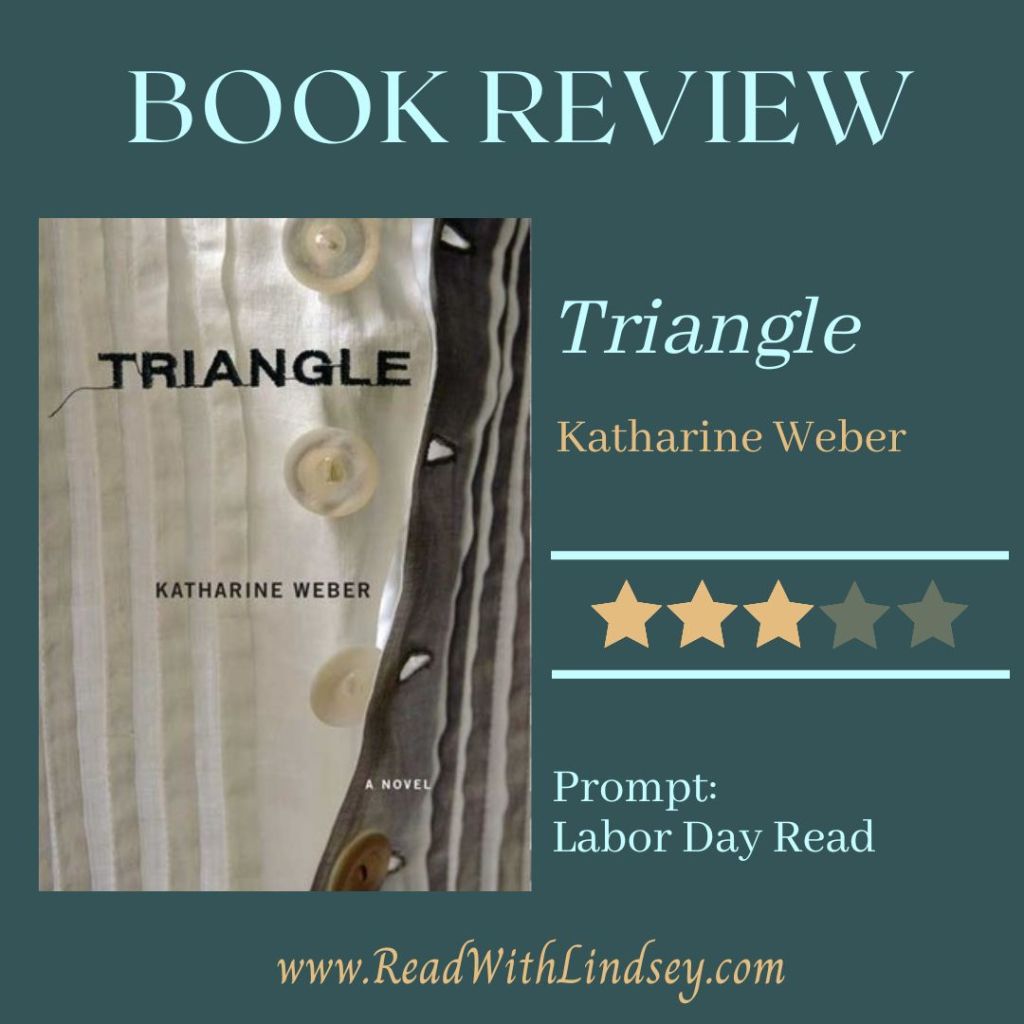
Esther and her sister are finishing their work sewing sleeves on to shirtwaists at the Triangle Shirtwaist Factory in New York City. It’s the end of the week – payday – and the workers on the ninth floor are having a small celebration for Sam and his fiancée. Just as they are gathering, there’s a huge explosion from the side of the building just below their floor. The workers turn to see flames shooting up and smoke rolling towards them. They have to escape…but only a few from that floor will make it.
Katharine Weber investigates family lore and her grandmother’s history in Triangle. While listed as historical fiction, this book is more fiction and very little history. The public relations materials discusses Weber’s personal connection to the tragedy through her paternal grandfather and it leads readers to assume this would be a more personal story. Readers are also led to believe this story will center on the Triangle factory, but over half of the story follows Esther’s granddaughter and her beau, a composer who finds inspiration in odd places.

I give Triangle 3 out of 5 stars. I enjoyed the first chapter of this book immensely – it is written as a transcript of Esther’s testimony in the court case following the fire. However, I lost interest as soon as I started chapter two, which follow George and Rebecca’s relationship. This is where Weber travels to literary left field and goes into depth about Rebecca’s scientific work and George’s inspiration – medical test results and DNA. There was no connection between the two topics and the writing felt very different. I actually checked to make sure my Kindle didn’t invertedly open another book. The majority of the book then focuses on George’s obsession with these melodies. This book should have been marketed as an exploration into Sternheimer’s protein music and related compositions, not the Triangle Shirtwaist Factory. This bait and switch tactic destroyed any good feelings I had for this book.
If you are looking to read more about the Triangle disaster, I would recommend reading another book – this won’t give you any details of significance that you can rely on. However, if you’re interested Sternheimer’s protein music or how composers can take inspiration from scientific topics, you may be interested in this book. The discussions of the fire itself may be upsetting to some – especially if you lived in New York City during the 9/11 tragedy – there are many parallels.
I had chosen Triangle for my Labor Day read. This holiday has its origins in the fair labor movements of the early 1900’s. After tragedies like the Triangle Shirtwaist fire, reforms were made to protect workers with better conditions and hours, and the formation of labor unions to continue fighting for improved conditions and pay. This tragedy has always fascinated me – I have often wondered if the workers understood the tinderbox they worked in every day, or if they requested changes to be made. This was a very different time when strikers were often physically attacked and replaced by temps so that the company did not suffer. These workers may have been too scared to speak up. I am thankful to work in an industry that values and preaches safety – construction jobsites still carry so many inherent dangers, but have come so far.
This holiday is all about celebrating the American worker. I hope you are able to enjoy the day away from your working environment. When you return to work tomorrow, stay safe and remember you have Stop Work Authority – if it’s not safe, don’t let your coworkers or yourself be put in danger!
This post contains affiliate links.
What I’m Reading
- Current print book: Lead From the Outside, Stacey Abrams
- Current audio book: The Emperor’s Children, Claire Messud
- Book I’m most looking forward to: Triptych, Karen Slaughter
Discover more from Read With Lindsey
Subscribe to get the latest posts sent to your email.

One thought on “Triangle”