

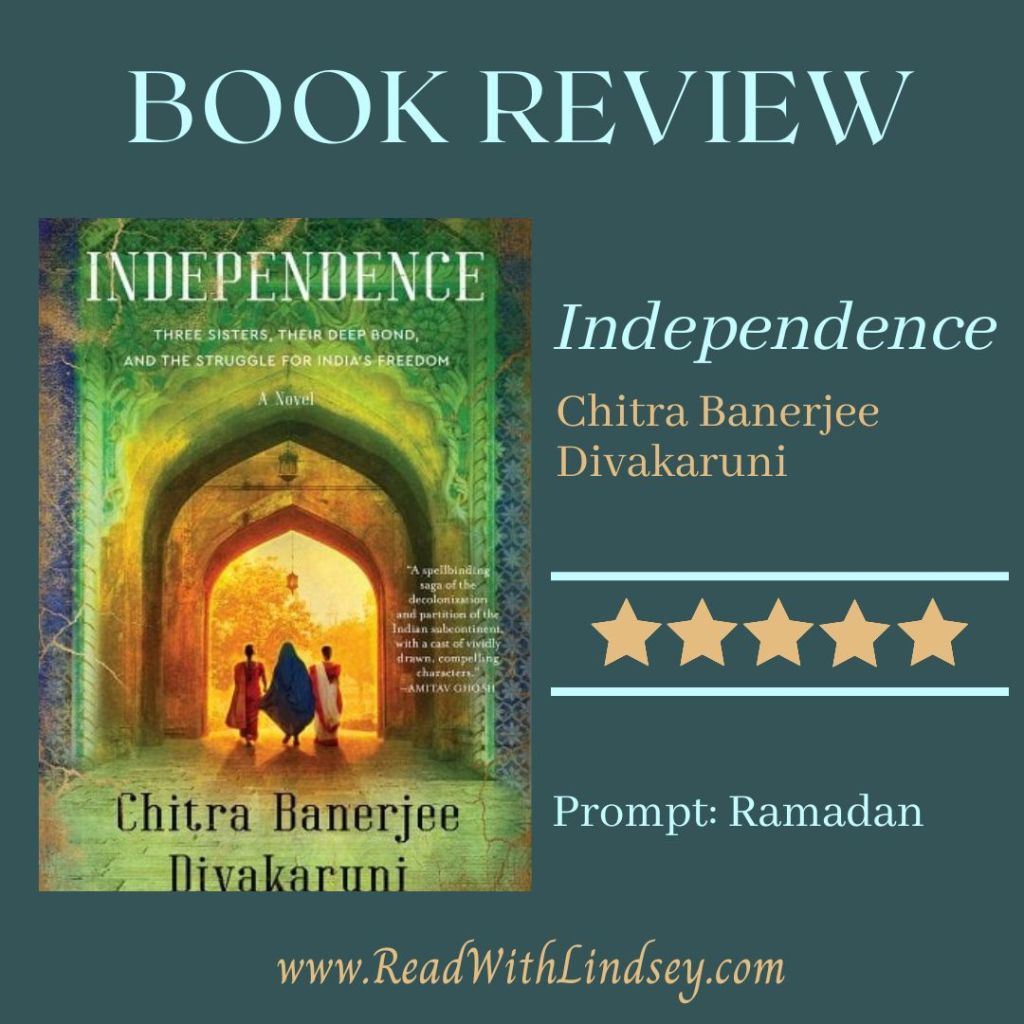
This weekend, I was honored to attend the Sheth Lecture in Indian Studies at Emory University’s Michael C. Carlos Museum. The speaker was author Chitra Banerjee Divakaruni who discussed her book Independence, along with her other works such as Mistress of Spices and One Amazing Thing. I chose to attend this lecture because I reviewed Independence last month with a 5 Star review, but I learned so much from listening to this discussion!
Chitra Banerjee Divakaruni is an author, a poet, and a professor at the University of Houston. She’s also an activist with Daya and co-founder of Maitri, which were described to me at the lecture as resources for Indian and South Asian women who are victims of domestic abuse and other hardships – there were so many women from these organizations in attendance! But more than anything, she has a heart dedicated to telling the stories of people, especially women, that have not yet been told.
When I approached my husband about joining me at this event, I really didn’t expect him to go with me. He isn’t a reader – he’ll tell you himself that he has read more in the past 7 years of being a dad than the 40 years of his life before that. However, my husband also likes to do things I like to do….so off we went. I tried my best to explain the story of Independence right before the lecture began, but there was no way my 5 minute recap could do it justice. But it didn’t seem to make a difference – when we left the lecture, my husband kept telling me all the things he learned during the talk.
Divakaruni talked about the challenge of writing this book from finding sources for the historical research, to deciding midstream to change the perspective from which this book was written. Given that this follows the three separate points of view of the sisters plus the fourth perspective of the country, this was not an easy undertaking! My husband brought up an appreciation for how the author carefully selected the historical materials used in her research – Divakaruni used newspapers that documented the partition of the country and the violence that followed, but selected them from various backgrounds: Indian, British, and British-controlled Indian.
My husband and I both enjoyed the Q&A session after the talk, but I especially enjoyed hearing the author read her own work. She chose a few passages that had deeply touched me when I first read them. First, she chose to read the quote located at the front of the book attributed to Amrita Pritam: “[There are many] stories which are not written on paper, but are written on the bodies and minds of women.” What a deep and profound sentence – so many times, history is recorded from the viewpoint of the male element, without consideration for the suffering or consequences of the women. In Anglo-Roman history, I think of the early battles in Brittain and Boudacca’s revolt against the Roman Empire after her husband, a Roman ally died and Rome decided to take over the area against the wishes of the former ruler and the people. To force the will of the male-dominated empire, the military publicly flogged Boudacca and raped her daughters. She could have quietly born those scares in the way the men had hoped, but chose to fight back. It is an intrinsic part of society that men do not expect the uproar of women – we are expected to quietly accept their will and their wants, but those scars are born in a way that shapes how women and minorities choose to live within their borders.
Divakaruni then read the passage from Chapter 4 in which the family races to the father’s clinic. This passage took my breath away when I first read it – the hatred and the violence based solely on religious beliefs astounded me at first. But, then I considered it in comparison to more recent events in American history: the violence against Jewish synagogues, or Muslim mosques, or even the Chinese cultural centers. This violence is based solely on the differences between those groups and the “white male majority” many assume is in control of the US. The author pointedly discussed that the Hindu and Muslim groups in India discussed in the book had lived side by side for decades without violence, but one key decision created a vast chasm between the sides. It became less about what the people had in common, and more about what makes them different.
I came away from the event feeling both inspired and awestruck. As we walked back to our truck, my husband and I discussed Divakaruni’s other works and made a mental note to add them all to my TBR stack. We also looked up the movies and shows based on her works like the 2005 movie Mistress of Spices. The lecture prompted a wonderful discussion between us over dinner as well.
I am always looking for new events like book signings and lectures – do you know of any coming up? I enjoy learning about more than just the books they write – I like knowing why the writers choose their topics and their interests. Drop your favorite upcoming events in the comments below – hope to see you there!

This post contains affiliate links.
Discover more from Read With Lindsey
Subscribe to get the latest posts sent to your email.
